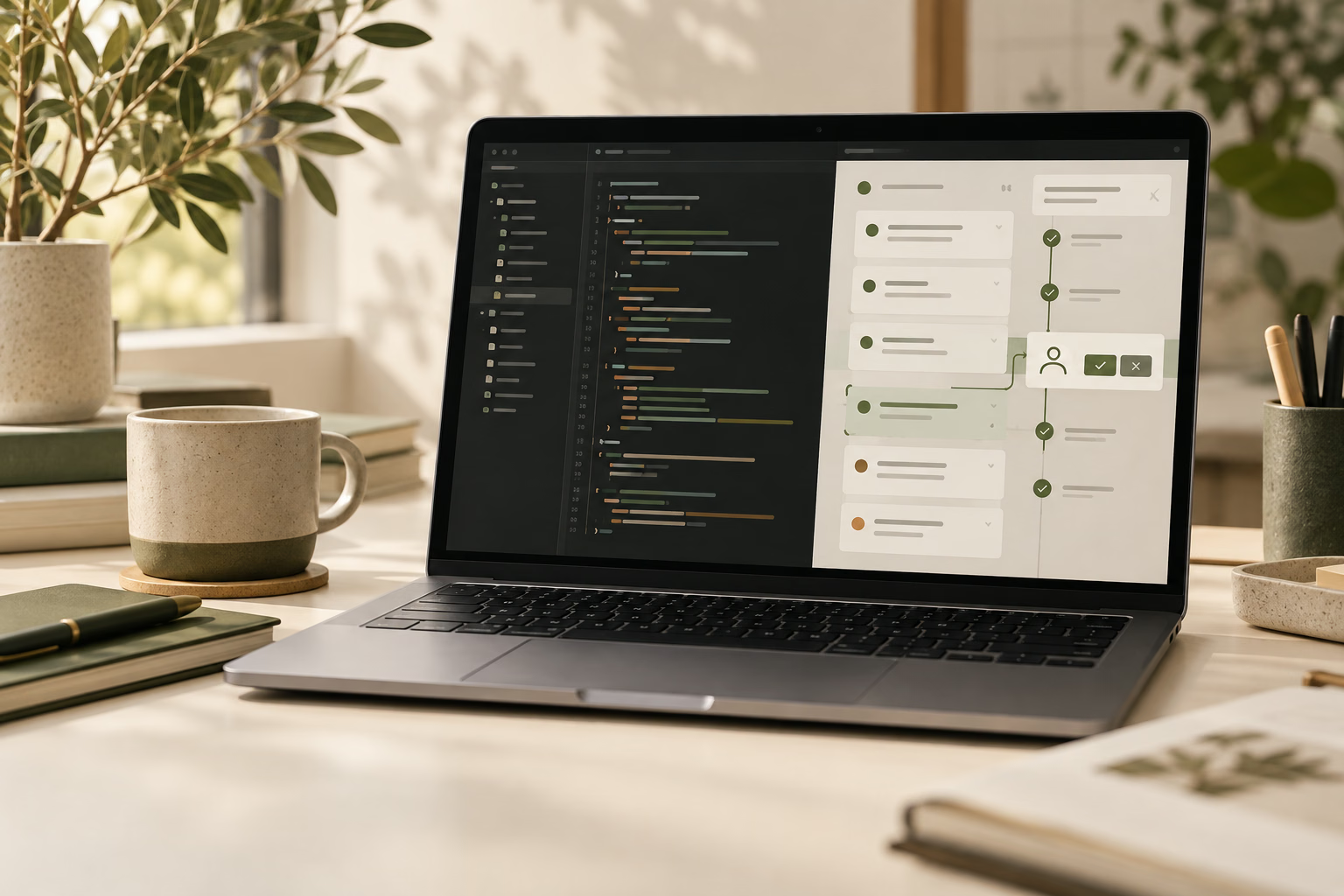
The change in AI assisted development is not simply that a model can suggest a function. Coding agents can inspect a repository, run commands, edit several files, and return with a proposed change. That makes them useful for more work, and makes the boundaries around that work more important.
Treat autonomy as a setting, not a promise
In a February 2026 analysis of Claude Code and API activity, Anthropic reported that software engineering made up nearly half of the agent activity it observed through its public API. In Claude Code’s longest running sessions, the time before the agent stopped nearly doubled over three months, from under 25 minutes to over 45. These are observations from Anthropic’s products, not a census of every development team, but they point to a practical shift: agents are being asked to carry work across more steps. Anthropic’s agent autonomy analysis
Longer runs can save context switching, but they also give a mistaken assumption more room to spread. A good workflow defines what the agent may change, what it must ask about, and how a person can inspect or stop its work.
Start with work that has a clear boundary
Choose a task with a visible result and a way to check it. Examples include adding tests for a known behavior, updating a self contained component, documenting an existing API, or investigating a reproducible bug. Avoid starting with a vague request such as “improve the app”; the agent needs a definition of done that the team can review.
Before delegation, provide the relevant product goal, repository conventions, constraints, and acceptance criteria. Ask the agent to explain its plan before making broad changes. Keep tasks small enough that a reviewer can understand the resulting diff.
- What behavior should change, and what should stay the same?
- Which files, services, or data should the task touch?
- What checks must pass before the work is ready for review?
Give tools only the access the task needs
An agent’s permissions are part of its design. Use a branch or sandbox, keep secrets out of its context, and limit access to production systems. Require a person to review consequential actions such as changing authentication, modifying customer data, deploying a release, or making a purchase on a user’s behalf.
Research from Google on software engineering agent behavior groups developer expectations around following team standards, producing reliable code, solving the right problem, and collaborating with the developer. That is a useful checklist for a real workflow: the agent should fit the way the team works, not only produce code that looks plausible. Google Research’s taxonomy of software engineering agents
Review the outcome, not the confidence
Keep the same engineering checks you would expect from a teammate: run the relevant tests, inspect the diff, verify edge cases, and check that the solution follows project conventions. A green test suite is evidence, not proof that the implementation matches the product requirement. For changes that affect security, payments, data migration, or reliability, use a reviewer with the right domain context.
Measure whether the workflow helps the team finish useful work. Track review time, rework, defects, and cycle time alongside the number of changes an agent proposes. If generated work creates a larger review burden than it removes, narrow the task or improve the context and checks before expanding access.
Apply this to your product
Start with one user journey or integration in your current product. Document the expected behavior, review the linked source material, and agree on the checks needed before release. The right implementation depends on your existing architecture and operational requirements.
Further reading
MORE FROM OUR TEAM
Related Engineering Insights
Cloud-Native Application Modernisation in India: A Practical Guide for Growing Businesses
Plan cloud-native modernisation with a practical guide to modular architecture, APIs, observability, security and phased migration for Indian businesses.
Custom Logistics Software for Nagpur Businesses: Fleet, Warehouse and Supply Chain Management
Explore custom logistics software for Nagpur businesses, from fleet and warehouse workflows to shipment tracking, integrations and operational dashboards.
Hotel Website Development in Jaipur: Direct Booking Platforms, Guest Experience and Digital Growth
Learn how Jaipur hotels and hospitality businesses can improve direct bookings with fast websites, booking journeys, CRM integrations and mobile-first UX.