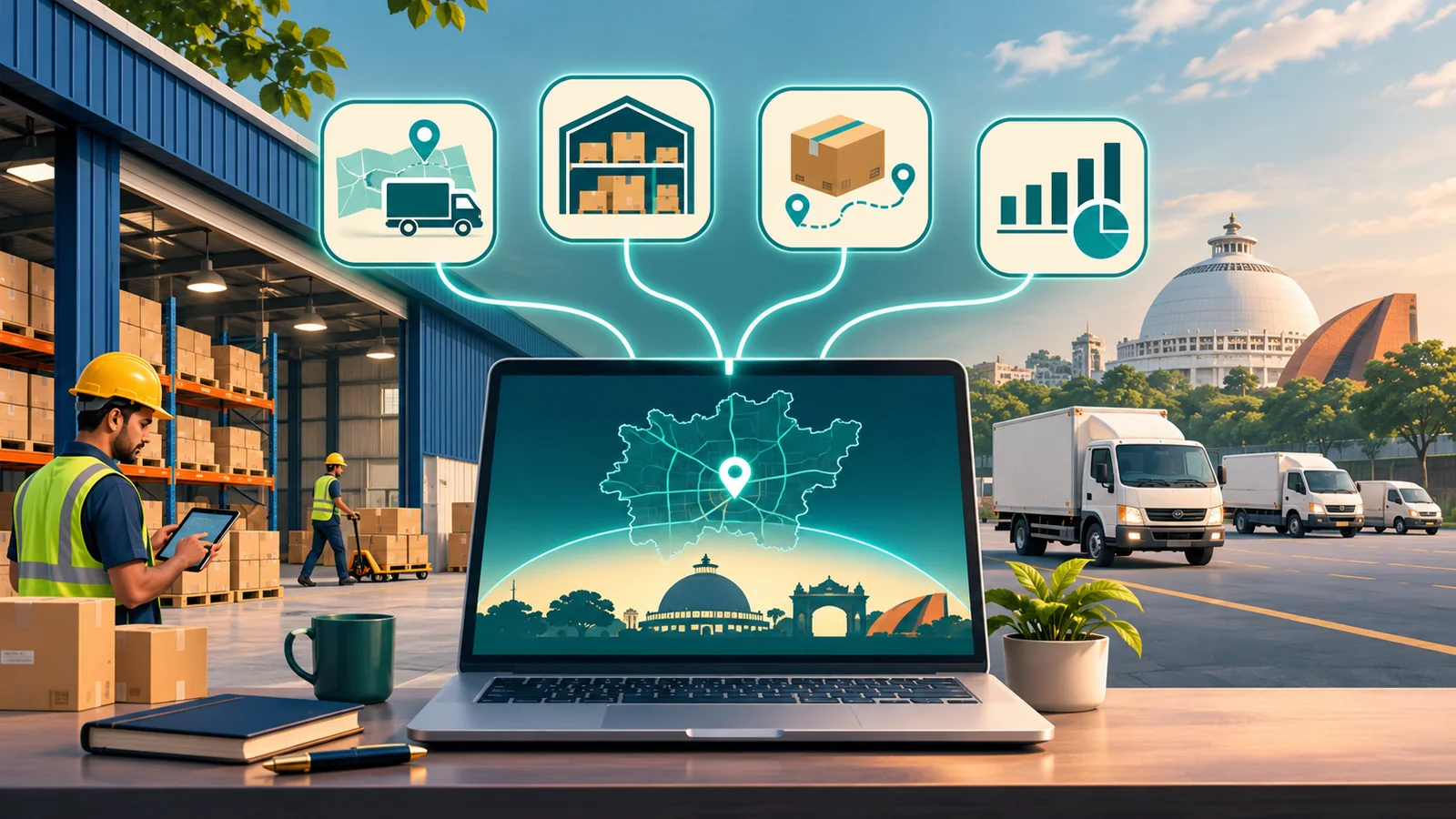
Nagpur has an important position in central India's industrial and logistics landscape. Businesses operating across manufacturing, transportation, warehousing and distribution need reliable systems to manage daily operations.
Overview
As operations expand, managing vehicle movements, warehouse inventory, shipment information and customer orders through separate spreadsheets and applications can become increasingly difficult.
A transport company might maintain vehicle information in one system, driver details in another and shipment records through manual communication. Warehouse employees may not have access to updated stock information, while management spends time collecting reports from different departments.
These challenges can affect operational visibility and make it harder to coordinate business activities.
Custom logistics software provides an opportunity to bring these processes together.
For businesses in Nagpur, Butibori, Hingna, MIHAN and surrounding industrial areas, a properly designed digital platform can help connect logistics workflows, improve information access and support future expansion.
In this guide, we explain what logistics software should include, how businesses can implement it and when custom software development makes sense.
1. Why Logistics Businesses Need Modern Software
Logistics operations involve several connected activities:
- Vehicle and fleet management.
- Driver and employee coordination.
- Warehouse inventory.
- Shipment tracking.
- Customer orders.
- Delivery management.
- Billing and reporting.
When these activities operate independently, employees often need to enter the same information multiple times.
For example, a shipment may be recorded by the sales department, manually shared with the transport team and separately updated by the warehouse.
This creates opportunities for inconsistent records and delayed communication.
A centralised logistics application can connect these activities through shared data and defined workflows.
2. Important Logistics Software Features for Nagpur Businesses
A. Fleet management
Fleet management software helps businesses maintain information about their vehicles and transport operations.
Useful functionality includes:
- Vehicle registration records.
- Driver assignments.
- Trip scheduling.
- Vehicle availability.
- Maintenance records.
- Fuel and expense tracking.
- Document expiry reminders.
A transport operator managing several vehicles can use a central dashboard to understand vehicle availability and upcoming maintenance requirements.
B. Shipment tracking
Shipment management allows businesses to follow orders from dispatch to delivery.
A platform can include:
- Shipment creation.
- Dispatch information.
- Delivery status.
- Estimated delivery information.
- Proof-of-delivery uploads.
- Customer notifications.
- Exception reporting.
Where supported by GPS devices or external tracking services, the application can also display location information.
C. Warehouse management
Warehouse operations are closely connected to logistics.
A custom warehouse management system can provide:
- Product and SKU records.
- Stock-in and stock-out operations.
- Warehouse location management.
- Barcode scanning.
- Stock transfers.
- Inventory reconciliation.
- Low-stock notifications.
For businesses operating multiple storage facilities, location-specific inventory visibility is particularly useful.
D. Transport management
A transport management system can coordinate:
- Order allocation.
- Vehicle scheduling.
- Route planning.
- Driver assignments.
- Delivery documentation.
- Transport expenses.
- Customer communication.
Businesses can also integrate mapping and route-planning services where appropriate.
E. Business dashboards
Management should be able to understand operational activity without collecting multiple spreadsheets.
Useful reports include:
- Active shipments.
- Pending deliveries.
- Vehicle utilisation.
- Warehouse inventory.
- Transport expenses.
- Delayed orders.
- Customer-wise shipment summaries.
The dashboard should focus on decisions employees actually need to make.
3. Why Nagpur Businesses Should Consider Integrated Logistics Platforms
Nagpur's industrial ecosystem includes manufacturing clusters, warehouses, inland container depots and the MIHAN industrial and logistics ecosystem. The Maharashtra Industries Department documents industrial areas including Butibori, Hingna and Umred.
For businesses operating in these environments, software requirements can extend beyond a simple website.
Consider a distributor managing products across multiple warehouses.
The business may need to connect:
- Customer order management.
- Inventory availability.
- Purchase requirements.
- Vehicle assignment.
- Dispatch information.
- Delivery confirmation.
- Customer billing.
A connected platform allows these workflows to exchange information through APIs and a shared backend.
The goal is not to digitise every activity immediately. Start with the processes that create the most operational friction.
4. Custom Logistics Software vs Ready-Made Software
Ready-made logistics software can be appropriate when its features match the business.
However, some businesses have specific workflows, existing systems or integration requirements.
| Requirement | Ready-made software | Custom software |
|---|---|---|
| Standard fleet tracking | Often suitable | May be unnecessary |
| Unique approval workflows | Product-dependent | Can be tailored |
| Multiple existing integrations | Depends on connectors | Can be designed around them |
| Custom customer portals | May require extensions | Can be developed |
| Specific warehouse processes | Depends on configuration | Can reflect operational needs |
| Long-term ownership | Vendor-dependent | Depends on agreement and architecture |
Evaluate total ownership cost, maintenance, integrations and operational requirements before choosing.
5. Mobile Applications for Drivers and Field Employees
A logistics platform should not depend entirely on an office dashboard.
Drivers and field employees may need a mobile interface to:
- View assigned trips.
- Access delivery information.
- Update shipment status.
- Upload delivery documents.
- Report delays.
- Receive notifications.
- Contact relevant operations teams.
A Flutter or React Native application can support cross-platform Android and iOS development.
The application should also consider poor network connectivity, offline data capture and safe synchronisation when connectivity returns.
6. Integrating Logistics Software with Existing Business Systems
Many companies already use accounting software, inventory systems or customer management tools.
A new logistics platform should not automatically require replacing every existing application.
Instead, evaluate integrations with:
- Accounting software.
- ERP systems.
- CRM applications.
- Payment gateways.
- Email and SMS services.
- Mapping platforms.
- Barcode scanners.
- Shipping and tracking APIs.
For example, when a delivery is completed, the logistics platform can send the relevant delivery information to the billing system.
API integrations help reduce duplicate data entry and create more consistent workflows.
7. How to Start a Logistics Software Project
A practical development process should include:
Step 1 — Workflow discovery
Understand how vehicles, warehouses, employees and shipments are currently managed.
Step 2 — Feature prioritisation
Identify the essential modules required for the first release.
Step 3 — UI/UX design
Prepare dashboards and mobile workflows for administrators, drivers and warehouse employees.
Step 4 — Backend and API development
Design data structures, authentication, permissions and integrations.
Step 5 — Development and testing
Build the system in manageable milestones and test realistic operational scenarios.
Step 6 — Deployment and support
Deploy the application, train users and establish a maintenance process.
8. What Does Logistics Software Development Cost?
The cost depends on the functionality required.
A basic shipment management dashboard has different requirements from an integrated platform containing fleet management, warehouse operations, mobile applications and external APIs.
The project scope should specify:
- Number of user roles.
- Required modules.
- Mobile application requirements.
- Integrations.
- Reporting requirements.
- Hosting infrastructure.
- Data migration.
- Maintenance.
Request a module-wise quotation rather than comparing development proposals based only on the headline price.
9. How TeamRedevs Helps Nagpur Businesses
TeamRedevs is headquartered in Jaipur, Rajasthan, and works remotely with businesses in Nagpur and across India.
Its capabilities include custom software, web applications, APIs, mobile applications, UI/UX design and legacy system modernisation.
For a logistics business, this can include designing a shipment dashboard, building a warehouse application, developing driver-facing mobile apps or connecting existing business systems.
The approach begins with understanding operational workflows, defining a practical roadmap and sharing working demonstrations during development.
Planning a logistics management platform for your business?
Explore TeamRedevs Software Development or discuss your project.
Conclusion
Logistics businesses in Nagpur and Vidarbha operate across connected activities involving transport, inventory, warehousing and customer coordination.
Custom software can help bring these processes together through centralised information, API integrations and mobile applications.
The most effective starting point is identifying the operational problems that consume the most time or create the greatest coordination difficulties.
Build around those requirements and expand the platform as the business grows.
Frequently Asked Questions
1. What is logistics software?
Logistics software helps businesses manage transportation, fleet operations, shipments, warehouses and delivery workflows.
2. Can logistics software be customised for Nagpur businesses?
Yes. Custom software can be designed around the operational requirements of transport companies, distributors, manufacturers and warehouse operators.
3. Can I build a mobile app for drivers?
Yes. Flutter and React Native can be used to develop cross-platform applications for trip assignments, delivery updates and document uploads.
4. Can logistics software integrate with an ERP?
Yes. APIs can connect logistics systems with ERP, CRM, accounting and inventory applications.
5. Does TeamRedevs have an office in Nagpur?
TeamRedevs is headquartered in Jaipur and works remotely with businesses in Nagpur and other locations.
6. How long does logistics software development take?
The timeline depends on the number of modules, integrations, mobile requirements and testing scope. A phased implementation can help deliver the most important workflows first.
Internal links
Apply this to your product
Start with one user journey or integration in your current product. Document the expected behavior, review the linked source material, and agree on the checks needed before release. The right implementation depends on your existing architecture and operational requirements.
Further reading
MORE FROM OUR TEAM
Related Engineering Insights
Cloud-Native Application Modernisation in India: A Practical Guide for Growing Businesses
Plan cloud-native modernisation with a practical guide to modular architecture, APIs, observability, security and phased migration for Indian businesses.
Hotel Website Development in Jaipur: Direct Booking Platforms, Guest Experience and Digital Growth
Learn how Jaipur hotels and hospitality businesses can improve direct bookings with fast websites, booking journeys, CRM integrations and mobile-first UX.
Flutter 3.50 for Business Apps: New Features, Upgrade Considerations and What to Know
Explore Flutter 3.50's native interop, accessibility and performance updates, plus what Indian businesses should review before upgrading their mobile apps.