Overview
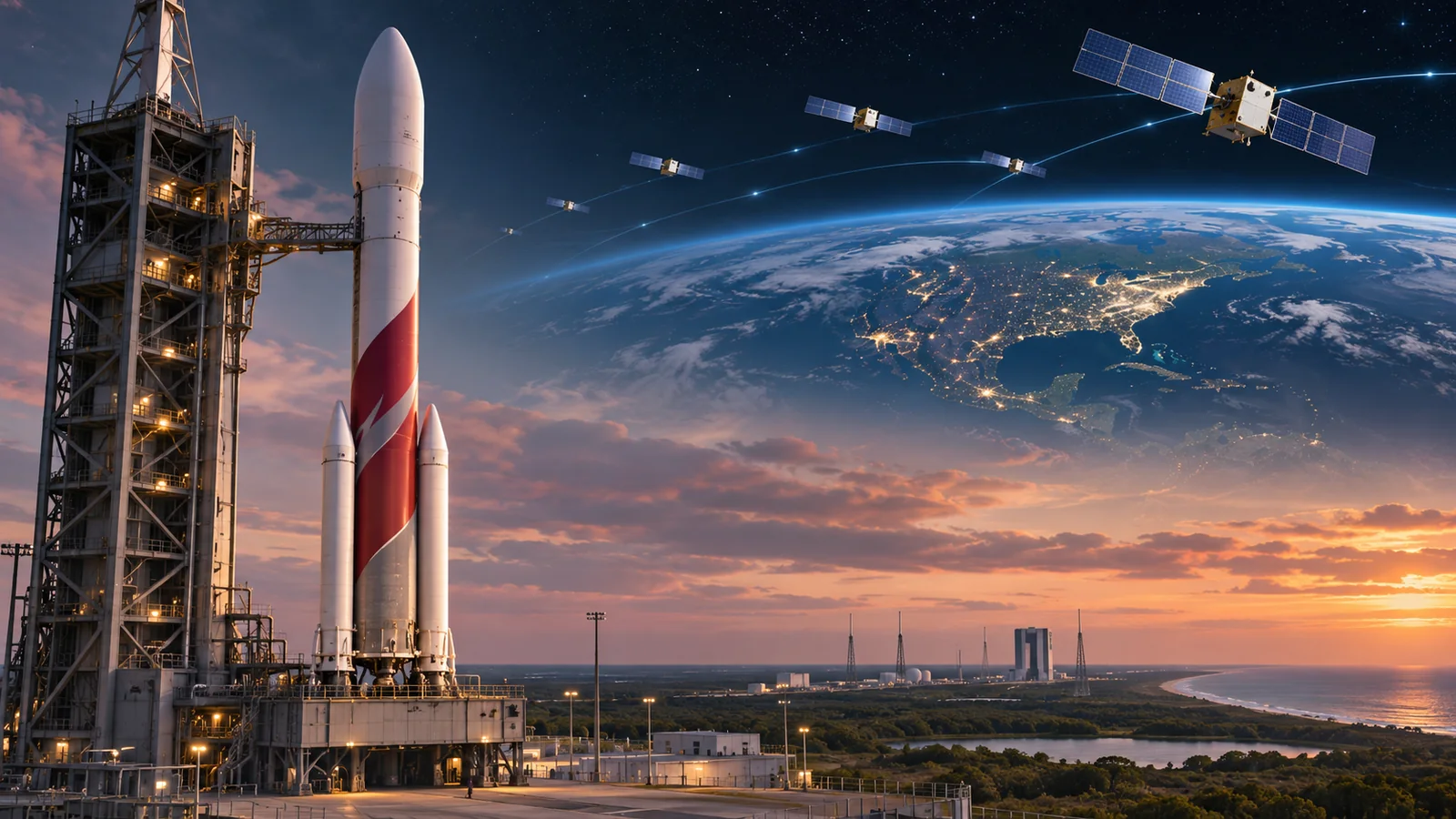
Amazon's effort to build a global satellite internet network has encountered another major setback after a United Launch Alliance Vulcan rocket failed to deliver 40 Amazon Leo satellites into orbit.
The launch took place on 15 November 2026 from Space Launch Complex 41 at Cape Canaveral Space Force Station in Florida.
Approximately 10 minutes after liftoff, the rocket experienced an anomaly that prevented the mission from reaching its intended orbit.
United Launch Alliance confirmed the failure in a public statement, saying that its launch team had received data showing the vehicle had failed to deliver the Amazon mission.
The company said the exact cause was not immediately known and that it would investigate the incident with its customer and relevant partners.
What happened during the launch?
The mission was known as Leo Vulcan 1, or LV-01.
It was particularly important because it was Amazon Leo's first launch using ULA's Vulcan rocket.
The vehicle lifted off at approximately 12:40 PM Eastern Time on 15 November.
Its payload consisted of 40 broadband satellites intended to join Amazon's growing low Earth orbit constellation.
ULA confirmed that an anomaly occurred around 10 minutes into the flight.
The payload did not reach its intended orbit.
Amazon acknowledged the loss and expressed confidence that ULA would investigate the problem and continue working on its longer-term launch plans.
Why is this failure significant for ULA?
United Launch Alliance is a joint venture between Boeing and Lockheed Martin.
Its Vulcan rocket is intended to provide heavy-lift launch capacity for commercial and government missions.
According to Reuters, this incident represents the first total mission failure in ULA's approximately 20-year history.
The mission was Vulcan's fifth flight since its debut in 2024 and its first flight in approximately nine months.
Before the launch, Vulcan had already undergone technical reviews involving its solid rocket boosters and BE-4 engines.
This history makes the latest failure particularly important.
A new rocket must establish consistent reliability before customers can confidently depend on it for large-scale satellite deployment and national-security missions.
However, it would be premature to identify a specific engine or booster as the cause of this incident.
Reuters reported that the anomaly appeared after separation of the second stage from the first-stage booster, but the precise technical failure had not been established.
What is Amazon Leo?
Amazon Leo is the company's low Earth orbit broadband satellite network, previously known as Project Kuiper.
Its goal is to provide high-speed internet connectivity to customers and communities that are underserved by traditional terrestrial broadband infrastructure.
The constellation is designed to include more than 3,000 satellites operating in coordinated low Earth orbits.
The network will use satellites connected through optical links and ground infrastructure to provide broadband services.
Amazon is attempting to build an alternative to SpaceX's Starlink network.
The scale of the project requires a large number of satellite launches, specialised ground infrastructure and reliable launch vehicles.
Amazon's launch strategy involves multiple providers, including:
- United Launch Alliance.
- Arianespace.
- Blue Origin.
- SpaceX.
This diversification is intended to reduce dependence on a single launch provider.
How much damage does the failure cause to Amazon's plans?
The immediate impact is the loss of 40 satellites that were supposed to expand the constellation.
Reuters reported that Amazon had deployed approximately 398 Leo satellites across 14 launches before the failed mission.
The company ultimately needs approximately 3,236 satellites for its planned global coverage.
That means the previously deployed constellation represented around 12% of the stated requirement.
Losing 40 additional satellites does not make the entire project unviable.
However, it increases the pressure on the deployment schedule.
The failed mission was particularly important because Amazon had contracted ULA for 38 Vulcan launches.
Amazon had described Vulcan as a primary workhorse for deploying a substantial portion of its first-generation constellation.
A prolonged grounding could therefore create scheduling complications for future missions.
Will Vulcan be grounded?
The duration of any launch suspension has not been officially established.
A technical investigation will be necessary to determine:
- What caused the flight anomaly.
- Which rocket systems were affected.
- Whether the problem involves vehicle hardware or another part of the flight sequence.
- What corrective action is required.
- What testing must take place before the next launch.
Reuters reported that the investigation could keep Vulcan grounded for months, but this should be treated as an expectation rather than a confirmed return-to-flight date.
The investigation will also matter to government customers who depend on ULA for access to space.
Amazon has other launch options
One important detail is that Amazon has not placed its entire satellite deployment programme in the hands of ULA.
The company has agreements with multiple launch providers.
According to Amazon's updated mission schedule, the next listed mission is expected to use Arianespace's Ariane 6 rocket.
The mission, called Leo Europe 4, is scheduled for no earlier than 23 November 2026 and is intended to deploy another 36 satellites.
That mission provides an important opportunity for Amazon to continue expanding its constellation while the Vulcan investigation progresses.
However, a successful alternative launch does not eliminate the need to restore Vulcan's reliability.
What this means for the commercial space industry
The incident highlights a structural challenge facing satellite internet companies.
Building a constellation requires more than manufacturing satellites.
It requires dependable access to launch vehicles capable of placing large batches of spacecraft into their assigned orbits.
SpaceX has a major competitive advantage because it operates its own rocket infrastructure and satellite network.
Amazon, by contrast, depends on multiple external launch partners.
That arrangement provides diversification but also introduces scheduling, integration and operational dependencies.
For businesses developing satellite communications, aerospace software, ground stations and connected devices, launch reliability remains a major infrastructure consideration.
What should we watch next?
The most important developments will be the findings of ULA's investigation and the company's corrective-action plan.
Other milestones include:
- The next Ariane 6 launch for Amazon Leo.
- Any changes to the Vulcan launch schedule.
- Updated Amazon Leo satellite deployment targets.
- ULA's progress towards returning to flight.
- The impact on Amazon's planned initial service rollout.
The Vulcan failure is a significant setback, but not the end of Amazon's satellite internet programme. Its longer-term impact will depend on how quickly ULA can identify the problem and restore confidence in the rocket.
Why this is trending
This was the strongest community-discussion story of the three selected topics.
- Reddit r/space: The launch failure generated substantial discussion, with the original incident thread reaching approximately 1,200 upvotes at retrieval. Participants examined the official ULA statement and discussed the mission sequence.
- Reddit r/technology: The incident also generated a separate discussion. Users debated Amazon's dependence on launch providers, satellite deployment schedules and the distinction between confirmed technical information and speculation about the cause.
- The Verge: Published reporting on 15 November explaining the failed deployment and the implications for Amazon Leo.
- Reuters: Independently confirmed the payload loss, launch history and potential impact on the US launch market.
- Hacker News: The November 16 front page did not feature the Vulcan incident.
- X: ULA and Amazon statements were referenced by reporting, but direct post retrieval was restricted. No post-engagement figures are claimed.
- daily.dev: No matching current developer-community article verified.
- TechCrunch: No dedicated Vulcan failure report found in the retrieved November 16 coverage.
The Reddit discussion is a genuine community signal, but comments speculating about the cause of the anomaly should not be treated as confirmed engineering findings.
Sources
- United Launch Alliance — Vulcan Leo 1 Mission — 15 November 2026. Primary mission information and vehicle details.
- Amazon — Amazon Leo Mission Updates — Updated 15 November 2026. Primary confirmation of the failed payload, Amazon's statement and upcoming mission schedule.
- Amazon — First Vulcan Mission With 40 Satellites — 9 November 2026. Original mission configuration, 40-satellite payload and 38-launch partnership.
- Reuters — Vulcan Rocket Fails After Launch, Destroying Amazon Satellite Payload — 15 November 2026. Independent reporting on the mission failure, investigation and implications.
- The Verge — Vulcan Rocket Fails, Losing 40 Amazon Leo Satellites — 15 November 2026. Technical and industry context.
- GeekWire — Amazon Loses 40 Leo Satellites After Vulcan Failure — 15 November 2026. Additional reporting on Amazon's deployment programme.
- Reddit r/space — Vulcan LEO-1 Suffers an Anomaly — 15 November 2026. Community discussion referencing ULA's statement.
- Reddit r/technology — Vulcan Rocket Fails — 15–16 November 2026. Broader technology-community discussion.
Further reading
- United Launch Alliance — Vulcan Leo 1 Mission — 15 November 2026. Primary mission information and vehicle details.
- Amazon — Amazon Leo Mission Updates — Updated 15 November 2026. Primary confirmation of the failed payload, Amazon's statement and upcoming mission schedule.
- Amazon — First Vulcan Mission With 40 Satellites — 9 November 2026. Original mission configuration, 40-satellite payload and 38-launch partnership.
- Reuters — Vulcan Rocket Fails After Launch, Destroying Amazon Satellite Payload — 15 November 2026. Independent reporting on the mission failure, investigation and implications.
- The Verge — Vulcan Rocket Fails, Losing 40 Amazon Leo Satellites — 15 November 2026. Technical and industry context.
- GeekWire — Amazon Loses 40 Leo Satellites After Vulcan Failure — 15 November 2026. Additional reporting on Amazon's deployment programme.
- Reddit r/space — Vulcan LEO-1 Suffers an Anomaly — 15 November 2026. Community discussion referencing ULA's statement.
- Reddit r/technology — Vulcan Rocket Fails — 15–16 November 2026. Broader technology-community discussion.
Building a product in this space?
MORE FROM THE NEWSROOM
Related news
 Technology
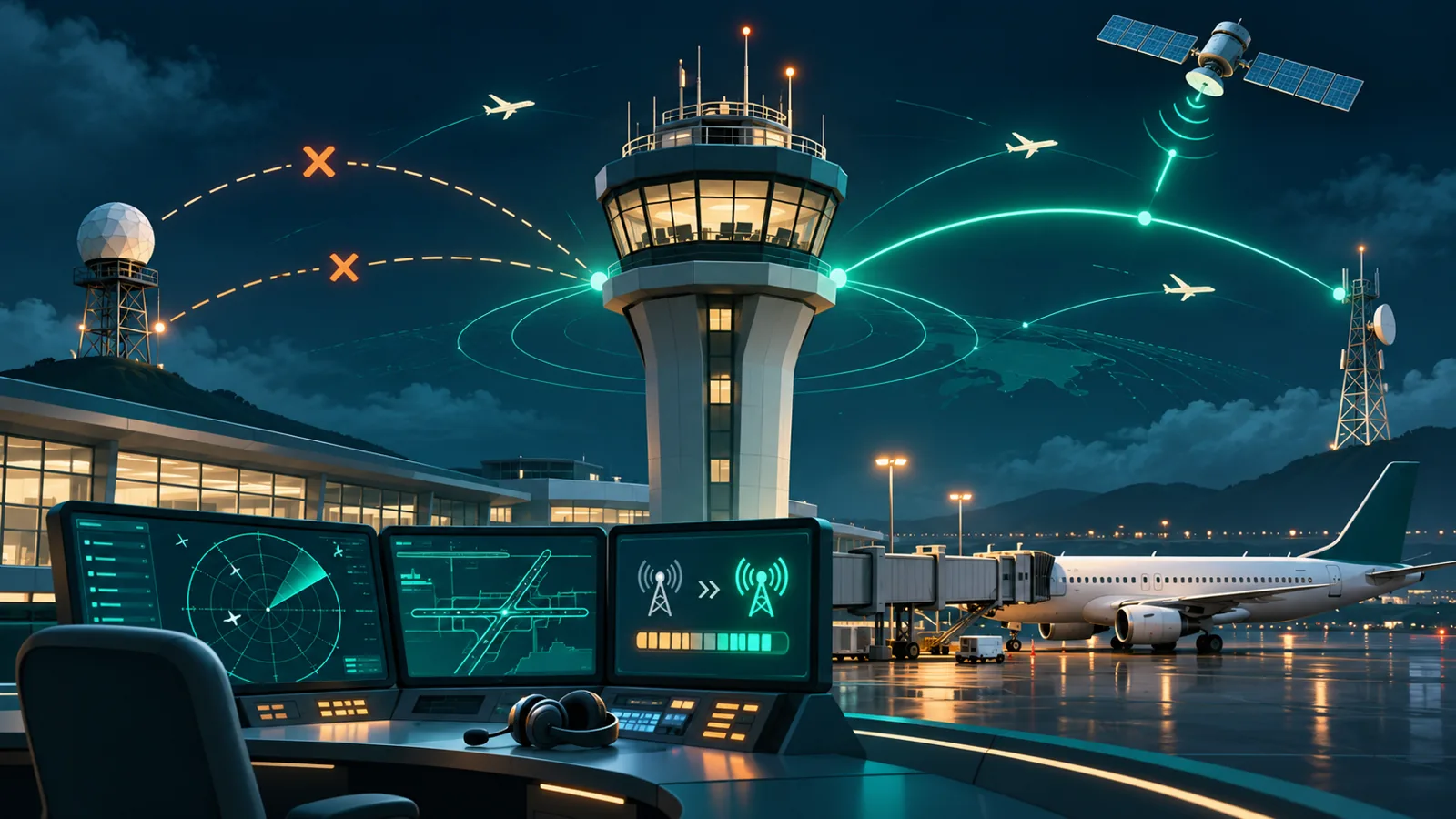
FAA Orders Rare Nationwide Flight Ground Stop After Air-Traffic Communications Outage
The US Federal Aviation Administration ordered a nationwide halt to departing flights on 13 November after communications problems affected air-route traffic control centers. The disruption exposed the operational importance of communications infrastructure that connects controllers and aircraft, while raising questions about redundancy, modernization and recovery planning.
 Technology
AMD Plans Investment in PsiQuantum as Companies Expand Quantum Computing Partnership
AMD and PsiQuantum have expanded their strategic partnership to develop the classical computing infrastructure required for utility-scale, fault-tolerant quantum computers. The collaboration brings together AMD's CPUs, GPUs, adaptive computing technologies and software with PsiQuantum's photonic quantum computing platform, while AMD also plans to make an equity investment.
 Technology
X Launches Native Video Clipping, Giving Creators and Clippers New Ways to Earn Rewards
X has introduced a native video clipping feature that allows users to extract short segments from longer videos and share them with their own commentary. The feature also connects clipping activity to X's Original Content Rewards program, creating additional monetization opportunities for eligible creators and users who share clips.