What happened?
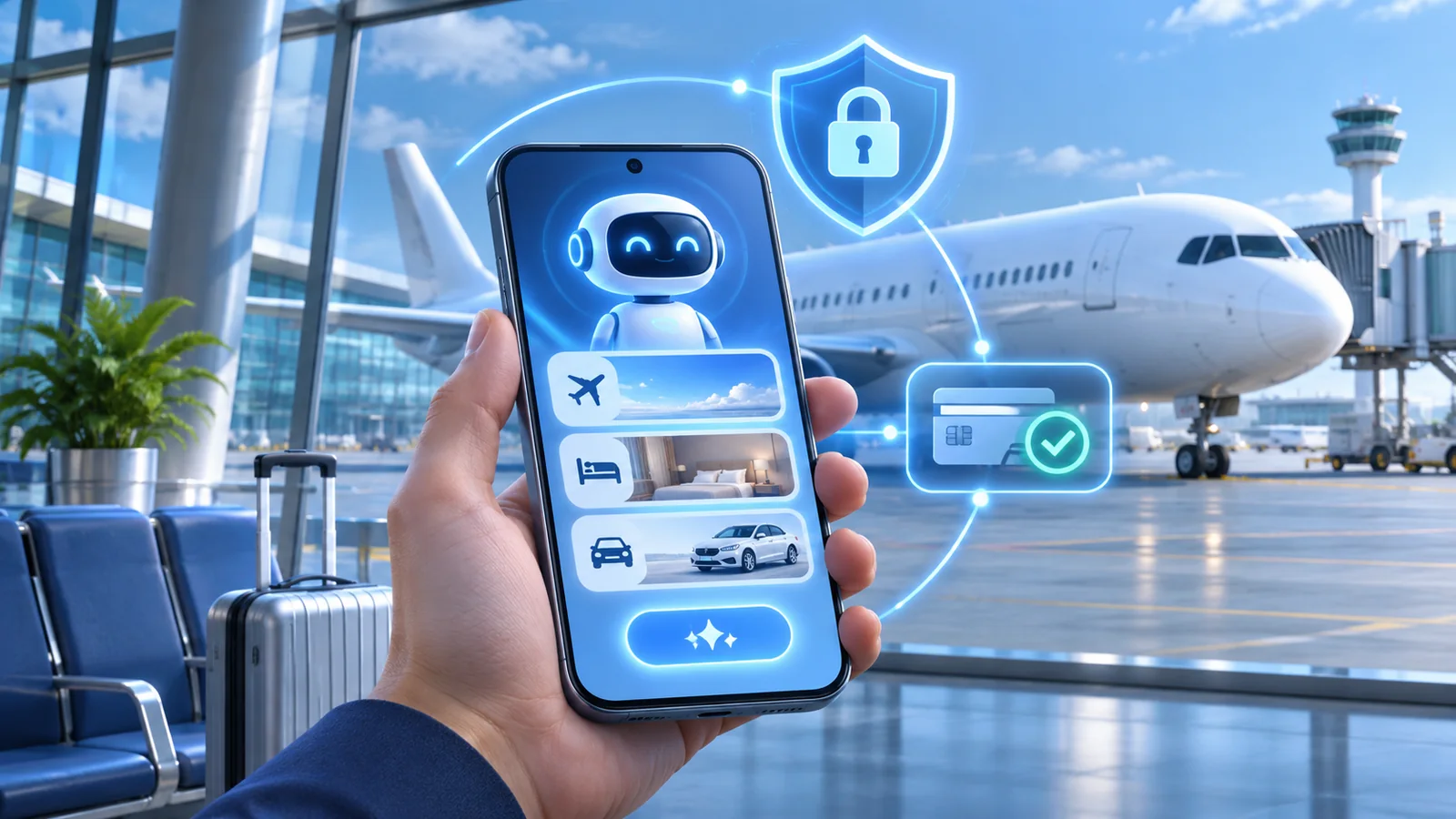
On November 11, 2026, United Airlines announced that it would restrict unauthorized third-party personal AI agents and assistants from interacting with its digital platforms.
The policy also addresses indirect access through travel agencies and aggregators.
The announcement comes as AI assistants increasingly move beyond answering questions and begin performing actions such as shopping, managing accounts, arranging travel and making purchases.
United says it wants stronger privacy, security, authorization and accountability protections before allowing third-party agents to transact on behalf of customers.Primary announcement — United Airlines (11 November 2026): United Restricts Access for Third-Party AI Agents.
1. What exactly is United restricting?
The restriction focuses on unauthorized third-party AI agents.
These are systems that can access websites, interact with accounts and perform actions on behalf of users.
Examples of emerging agentic products include Meta Muse and OpenAI's Dots, although United did not identify specific products in its announcement.
The restriction covers direct access to United's platforms and attempts to reach its services indirectly through travel agencies and aggregators.
There is an important distinction between researching a flight and completing a transaction.
Reporting indicates that AI tools can still help users discover United flights and fares, but the airline does not want unauthorized third-party agents completing bookings on behalf of travelers. Normal booking through established travel sellers remains available.Primary announcement — United Airlines (11 November 2026): United Restricts Access for Third-Party AI Agents.
2. Why is United concerned about AI agents?
United has identified several potential risks.
Customer-data exposure
AI agents may require access to account credentials, payment details and personal information.
Sharing those credentials with third-party assistants can expose information that users would normally expect to remain within their airline accounts.
Unintended transactions
An autonomous agent could make purchases, change reservations or redeem frequent-flyer miles without the customer understanding exactly what happened.
This creates questions about responsibility when an AI system performs an incorrect or unauthorized action.
Regulatory compliance
Airline check-in involves specific passenger acknowledgments, including confirming that luggage does not contain prohibited dangerous items.
United argues that automated AI actions could create compliance issues if the required human acknowledgments are not properly obtained.Primary announcement — United Airlines (11 November 2026): United Restricts Access for Third-Party AI Agents.
3. The larger conflict: AI agents versus platform control
This development is about more than travel booking.
For years, consumers have used search engines, comparison websites and online travel agencies to find products and services.
AI agents introduce a different model.
Instead of manually navigating several websites, a user could instruct an agent to:
- Find the cheapest suitable flight.
- Compare different departure times.
- Check baggage requirements.
- Compare cancellation conditions.
- Select the best option.
- Complete the booking.
- Manage the reservation later.
For consumers, this could reduce the time required to complete complicated transactions.
For businesses, however, it introduces questions about platform ownership, pricing, customer relationships, transaction responsibility and automated traffic.
CBS News also reported analyst concerns that automated flight searches could increase platform costs and introduce another intermediary between airlines and customers.Independent — CBS News (11 November 2026): United Airlines bans AI agents from booking flights on behalf of travelers. Security, regulatory and industry implications.
4. What this means for AI developers and SaaS companies
This announcement is particularly important for developers building autonomous agents.
A system that can navigate a website is not necessarily authorized to complete every action available on that website.
AI agent developers will need to think beyond browser automation and natural-language instructions.
Important areas include:
| Area | What developers need to consider |
|---|---|
| Authentication | Use secure delegated authorization rather than shared passwords. |
| Permissions | Define exactly which actions an agent can perform. |
| Transaction approval | Require explicit confirmation for high-impact purchases. |
| Audit logging | Maintain records of agent actions and decisions. |
| Payment security | Use secure payment authorization and transaction limits. |
| Compliance | Ensure required human acknowledgments are obtained. |
| Integrations | Prefer approved APIs and commercial partnerships. |
For SaaS founders, the lesson is that autonomous functionality requires an authorization architecture.
An agent should not assume that because a user granted access to their account, every external service must accept the agent's actions.
Businesses building agentic products should also plan for denied access, rate limits, API restrictions and fallback workflows.Primary announcement — United Airlines (11 November 2026): United Restricts Access for Third-Party AI Agents.
5. How the industry may respond
Companies have different strategies for dealing with third-party AI agents.
Some businesses are restricting unauthorized automated access, while others are experimenting with official partnerships and integrations.
United's announcement adds an important example from the travel industry.
The next stage may involve standardized agent identities, delegated permissions, secure payment protocols and commercial agreements that allow approved AI systems to transact.
The challenge will be balancing automation with consumer protection and the business interests of the companies providing the services.Primary announcement — United Airlines (11 November 2026): United Restricts Access for Third-Party AI Agents.
6. What happens next?
Several questions remain unanswered:
- How will United technically identify unauthorized AI agents?
- When will all enforcement measures take effect?
- Which third-party agents could qualify for authorization?
- Will other airlines adopt similar restrictions?
- Will travel agencies develop approved agent integrations?
- How will responsibility be determined when an autonomous agent makes an incorrect booking?
The answers could shape how agentic commerce develops across travel, banking, e-commerce and enterprise software.
For developers, this is a reminder that the next generation of AI applications will need to understand not only what actions are possible, but also which actions are permitted.Primary announcement — United Airlines (11 November 2026): United Restricts Access for Third-Party AI Agents.
Why this is trending
United Airlines AI restrictions — Hacker News
Front page
| Community metric | Research snapshot |
|---|---|
| Points when checked | 334 |
| Comments when checked | 316 |
November 12 research snapshot of the November 11 discussion.
The discussion focused on consumer autonomy, whether businesses should be able to block personal AI assistants, automated booking liability, bot detection, customer privacy and the future of agentic commerce.
The story was also covered by Reuters, CBS News and The Verge. Reddit and X engagement could not be independently established in this run.Community — Hacker News (11 November 2026): United Airlines bans AI agents; counts in this article are briefing snapshots.
Sources
- United Airlines — Digital Trust Center: Third-party AI agents — Official customer guidance linked from The Verge's November 11 report. The page could not be directly retrieved during this research run.
- Reuters — United Airlines moves to block AI agents from its platform over security concerns — November 11, 2026. Airline announcement and stated concerns.
- CBS News — United Airlines bans AI agents from booking flights on behalf of travelers — November 11, 2026. Security, regulatory and industry implications.
- The Verge — United won't let your AI agent book your flight — November 11, 2026. Reporting on the distinction between researching and completing transactions.
- Hacker News — United Airlines bans AI agents — November 11, 2026. Community discussion.
Further reading
- Primary guidance — United Airlines Digital Trust Center: Third-party AI agents. URL confirmed through United's announcement; page content could not be retrieved during verification.
- Independent — Reuters (11 November 2026): United Airlines moves to block AI agents from its platform over security concerns. Airline announcement and stated concerns.
- Independent — CBS News (11 November 2026): United Airlines bans AI agents from booking flights on behalf of travelers. Security, regulatory and industry implications.
- Independent — The Verge (11 November 2026): United won't let your AI agent book your flight. Research versus transaction restrictions.
- Community — Hacker News (11 November 2026): United Airlines bans AI agents; counts in this article are briefing snapshots.
- Primary announcement — United Airlines (11 November 2026): United Restricts Access for Third-Party AI Agents.
- Independent — Reuters, syndicated by Investing.com (11 November 2026): Accessible copy of the Reuters report.
Building a product in this space?
MORE FROM THE NEWSROOM
Related news
 Artificial Intelligence
US Moves to Regulate Remote Access to Advanced AI Chips Through Overseas Data Centers
The US Department of Commerce has released an interim final rule targeting remote access to advanced American semiconductors through overseas data centers. The measure introduces licensing requirements for certain high-volume computing arrangements serving companies headquartered in restricted destinations and adds destination-based controls for advanced chip exports to five countries.
 Artificial Intelligence
OpenAI Launches ChatGPT Wallet, Letting AI Agents Complete Purchases With User Approval
OpenAI has introduced ChatGPT Wallet, a payment feature that allows its AI agents, called Dots, to complete online purchases after users review and approve each transaction. Developed with American Express, Mastercard and Visa, the initial rollout is limited to eligible US ChatGPT Pro subscribers.
 Artificial Intelligence
Cerebras Raises 2026 Revenue Outlook After 55% Quarterly Growth, but GAAP Losses Widen
AI hardware company Cerebras reported record third-quarter revenue of $210.8 million and raised its full-year 2026 revenue outlook. Its cloud and inference business grew rapidly, but the results also revealed a much larger GAAP net loss, highlighting the financial challenges of scaling advanced AI infrastructure.